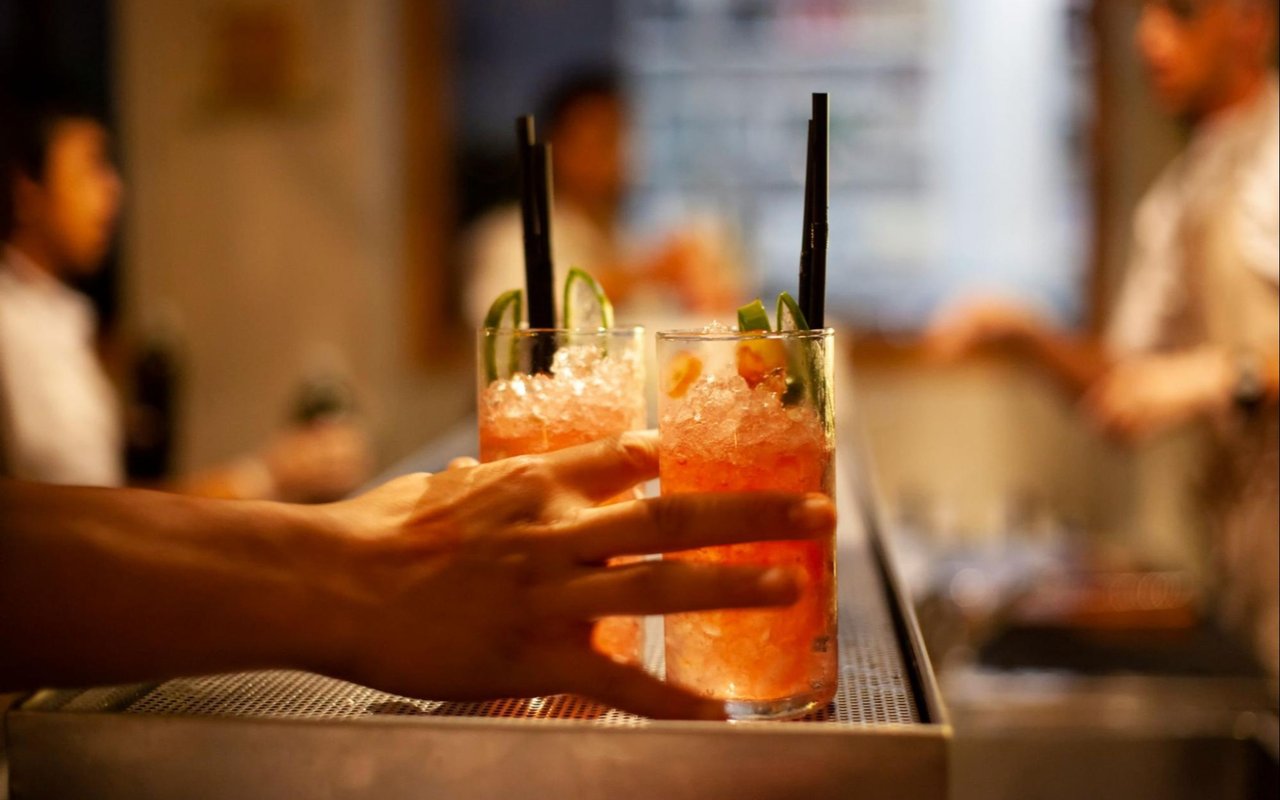
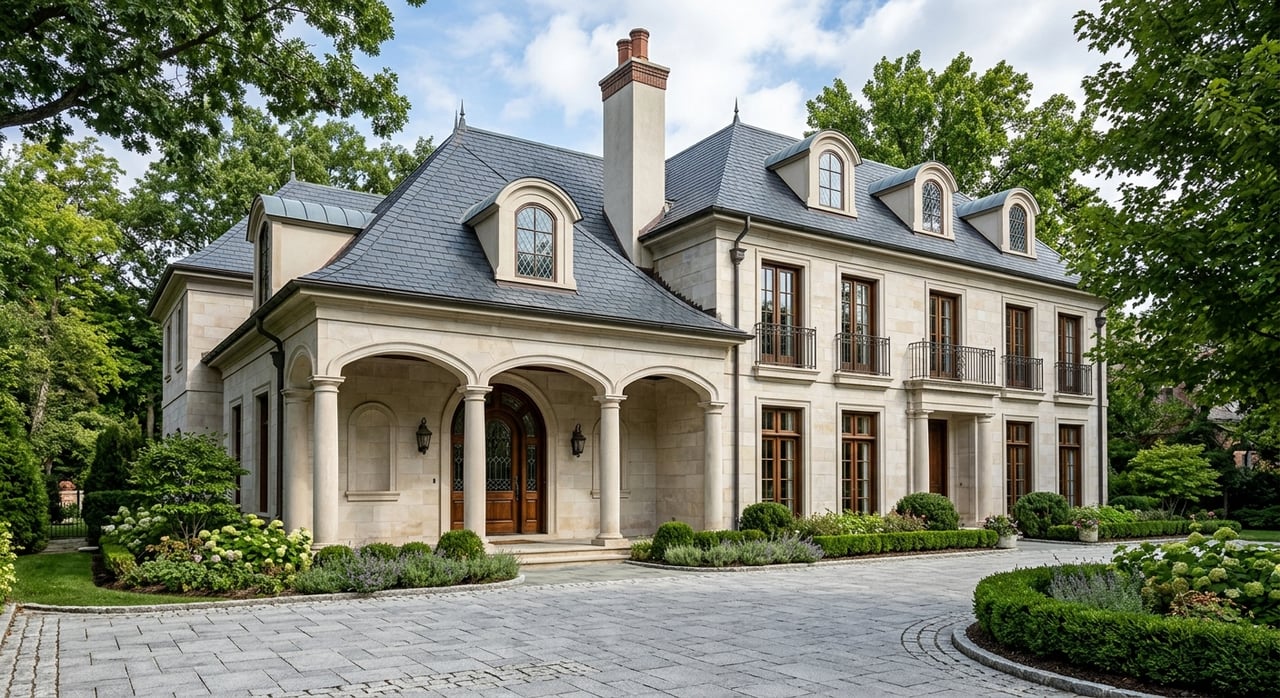
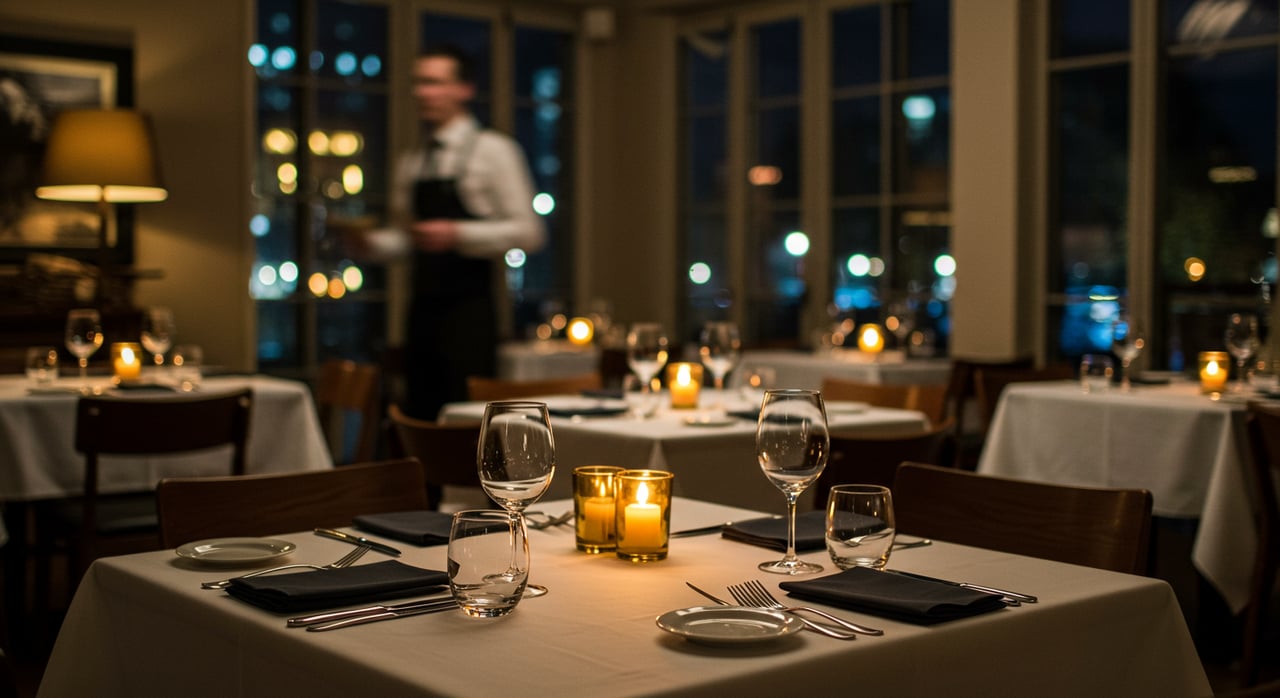
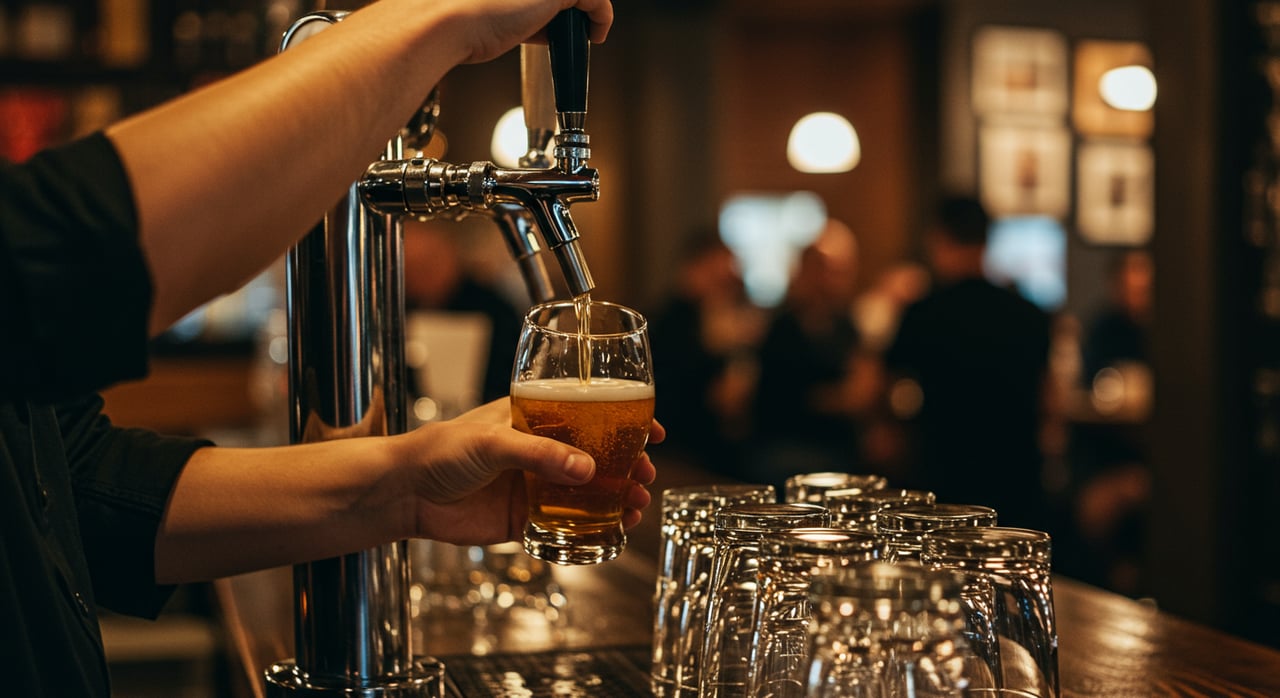
"Everyone wants to take advantage of every opportunity they have to sit outside," Lindsay Pohlad told the Wayzata City Council on July 21, making the case for more sidewalk in front of her Broadway Avenue restaurant. The council voted 4-0. It was a small request on a routine agenda, and it is the clearest statement anyone in this town has made all year about where downtown is headed.
Read 2026's downtown news as a single document rather than a series of announcements, and a pattern surfaces. Three restaurants changed names without changing owners. A fine-dining room is being converted into a walk-in bar. The city's largest new food tenant is an 800-square-foot takeout counter. The boardwalk out front was engineered, at the piling level, to stay open in February. Downtown Wayzata spent a decade getting very good at Saturday in July. What it is building now is Tuesday in November.
The sidewalk math is the tell
The permit Pohlad received adds roughly 468 square feet to an existing patio of 165 square feet, which is not an expansion so much as a rebuild at nearly four times the footprint. The new seating extends south along Broadway into the public right-of-way, running past the storefront of neighboring retailer Chico's, and accommodates about 28 more guests. City staff called the arrangement somewhat unusual because the patio reaches beyond the restaurant's own frontage, then determined it cleared requirements for pedestrian circulation, accessibility and fire access. The final layout preserves a walkway slightly over six feet wide against a five-foot city minimum.
Two details in that approval matter more than the square footage. The permit covers the 2026 season only and returns to the council for renewal every year, so this is a seasonal privilege the city re-grants rather than a permanent widening of the restaurant. And most of the new outdoor seats are being held for walk-ins.
That second point is the whole thesis in miniature. Pohlad told the council the original patio had been designed for cocktails and appetizers when Eloise opened in 2024, and that guests almost immediately began asking to eat full meals out there. The building was answering a question the neighborhood had already decided.
Three names changed. None of the owners did.
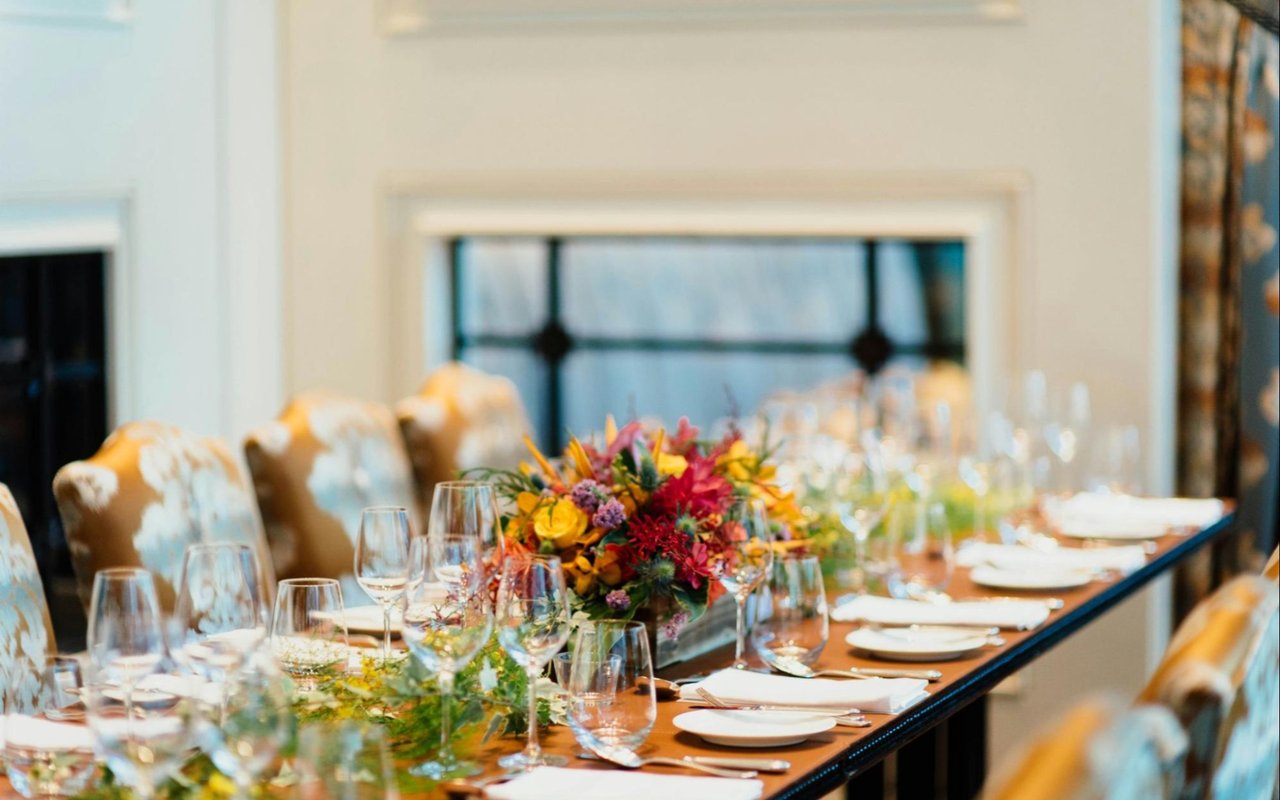
Eloise closes Monday, August 31 through Thursday, September 3, and reopens to the public Friday, September 4 as Bar Eloise. The changes are structural, not cosmetic: extended bar seating, added high-tops, televisions integrated into the bar area, and a large operable front window that opens the dining room onto Broadway. A substantial portion of the indoor room joins the patio in being reserved for people who did not book. The kitchen moves toward shareable plates, handhelds and hearty mains drawn from the playbook of its older sister restaurant, The Grocer's Table. Sunday brunch begins September 20. Hours run 4 to 9 p.m. Tuesday through Thursday, 4 to 10 p.m. Friday and Saturday, closed Mondays.
The restaurant's own explanation, published on its site, is unusually direct about the reasoning:
"You love our food but want a spot that's a little less 'special occasion,' with a more approachable vibe, a wider variety of casual fare, and a relaxed environment where you can just drop in."
That is a fine-dining room voluntarily giving up the reservation premium. It is also the third version of the same decision made within a few miles this year.
| Was | Is now | Since | What actually changed |
|---|---|---|---|
| ninetwentyfive, The Hotel Landing, 925 Lake St. E | Belle & Grey | April 8, 2026 | Refreshed dining room, seasonal menu, brunch and steakhouse standards kept, positioning shifted toward a neighborhood restaurant |
| Eloise, Broadway Ave. S | Bar Eloise | September 4, 2026 | Casual format, walk-in capacity indoors and out, operable window to the street, bar-forward menu |
| San Pancho, Long Lake | Comal | August 13, 2026 | Same owners, same team, new name and identity after using the opening months to refine the menu |
Comal belongs on this list even though it sits a few miles west. Angel and Finesse Luna, familiar to anyone who has spent time at 6Smith, reopened the longtime Long Lake restaurant as San Pancho in January, then spent the following months learning from guests before committing to a final identity in August.
How event limits shape downtown business plans
Here is the mechanism that makes all of this rational rather than sentimental.
Wayzata's special event matrix, adopted in October 2024, sorts events by attendance and caps how many large ones the calendar can hold. Level 3 events, meaning 500 or more attendees, are limited to two in July. When Macanda applied for two nights of HIFI on the Lake on July 17 and 18, city staff recommended denial, primarily because it would have been July's third Level 3 event. The tension that surfaced in the discussion is worth understanding as a resident: under an attendance-based system, the Fourth of July Flying Pancake Breakfast and Wayzata Community Church's annual rummage sale count against the same monthly ceiling as a ticketed concert.
The council tabled it in May, then approved it 4-1 on June 2 after the applicant compressed two nights into a single Saturday, July 25, running 3 to 10 p.m. behind Macanda at 294 Grove Lane East, with Hardt Antoine and Cole Knight co-headlining. One council member voted no on the grounds that the mitigation would not spare the neighborhood the disruption.
Whatever your view of electronic music on the bay, the arithmetic is fixed. There are only so many big-crowd days available downtown per month, and the city controls the number. A restaurant that wants to grow cannot simply capture more festival traffic, because the festival traffic is capped by ordinance. Growth has to come from the same people, more often. Which is exactly what a walk-in patio, an operable window and a Sunday brunch are designed to produce.
Then there is the one weekend the ordinance makes room for
The 52nd Annual James J. Hill Days runs Friday, September 11 through Sunday, September 13, presented by Sandvold Financial Group and produced by the Wayzata West Metro Chamber. It has occupied the weekend after Labor Day since 1975, and it brings upward of 80,000 guests into a city of roughly 4,000 residents across three days. Plan your driving accordingly and your walking generously.
What is actually on the schedule:
- Street Market, 175-plus vendors along Lake Street, opening Friday at 5 p.m. and running through Sunday
- Sandvold Stage at Minnetonka Avenue and Lake Street, free all weekend, with Powertap, Taylor Robert with Roll N Soul Band, The 70's Magic Sunshine Band, High & Mighty, ACES & 88's Dueling Pianos, and performances by Dance Esteem
- Lake Minnetonka Carnival on Lake Street, with discounted presale tickets at Lunds & Byerlys Wayzata through September 10
- Panoway Plaza doing double duty as the logrolling pool and the festival dog park, dachshund races included
- Wayzata Depot Museum open 10 a.m. to 4 p.m., model railroad running noon to 4
- The parade, Sunday at 3 p.m., sponsored by Davey Tree
If you have out-of-town family arriving that weekend, the Depot is the piece to lead with. The 1906 Tudor station that anchors the half-mile of Lake Street is also the reason there is a festival at all.
The boardwalk was built for February
The most consequential engineering decision downtown is invisible from the deck.
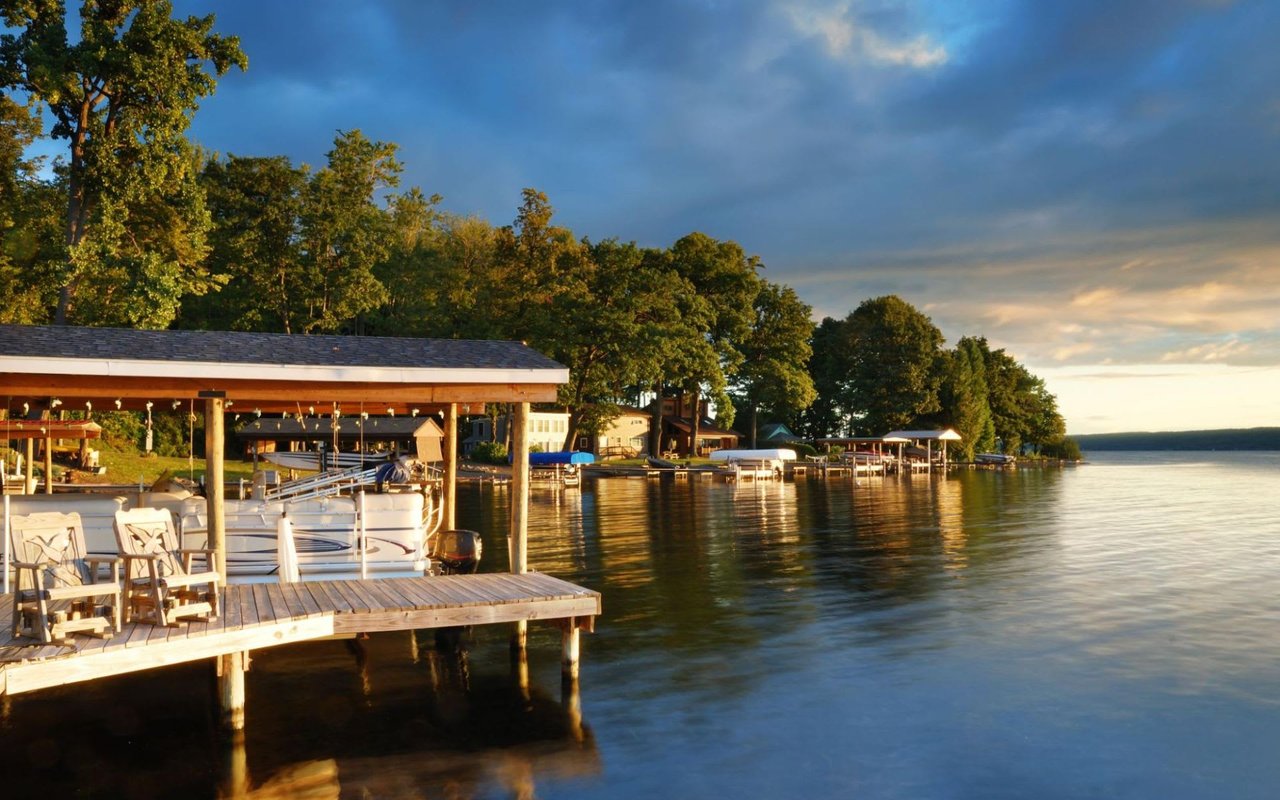
The Panoway Lakewalk, completed in 2024, runs 1,200 feet and 10 feet wide from the Broadway docks to the Depot, with two lakeside seating areas stepping down toward the water. It was assembled as a series of long-span bridge structures specifically to minimize the number of pilings driven into the lake bottom. Each of those pilings carries two piles fitted with custom steel ice skirts, sized to break up ice as it moves north during spring thaw.
The consequence is the part residents should file away. Because the ice skirts protect the structure, the Lakewalk does not require the winter aeration used to protect the community docks. Because there is no aeration, a stable ice shelf can form along the north edge of the lake. The boardwalk stays open all winter, and the ice in front of it stays sound enough for on-ice events. Phase 2 cost $11.5 million against Phase 1's roughly $10 million, funded through a mix of state bonding, city tax increment financing and private fundraising through the Wayzata Conservancy, and the design used Kebony wood carrying a 20-year warranty. Nobody spends that on a seasonal amenity.
Phase 1, finished in 2020, rebuilt Lake Street from Barry to Broadway, converted a municipal parking lot into Plaza Park, and carried the Dakota Rail Regional Trail safely across Ferndale Road. The final phase, still being fundraised by the Conservancy, restores the historic Section Foreman House as a learning center and adds an eco-park alongside updates to Depot Park.
What is still in the pipeline
Parcelle Organics has a signed location at 641 Lake Street East in the Marquee Place building, alongside Gianni's, Judd Frost Clothiers, Sakana Sushi, Julia Moss and McCormick's. Kamal Mohamed described it in January as an 800-square-foot grab-and-go counter built for picking up food before a walk along the water, with a hoped-for spring opening. It remains listed as coming soon, with posted hours of 8 a.m. to 8 p.m. daily. ModernWell, the women-centered coworking operation, is taking 2,500 ground-floor square feet at The Promenade.
Between now and then: the last Sunday sessions of Music in the Park wind down on the Great Lawn across from the Hotel Landing this month, and the Boo Bash Dash and Boo Blast return Saturday, October 24, with the 10K, 5K, Lake Street Mile and Family Fun Run staging near the Great Lawn. Last year's edition closed westbound Lake Street from Engel to Ferndale between 8:30 and 11:30 a.m., which is the pattern to expect.
None of this is a boom. It is a recalibration, and it is being made by operators who have decided the reliable customer is the one who lives here. That is a quieter kind of confidence in a downtown than a new tower would be, and in the long run it is the more durable one.
If you own property here and want to understand what a district reorganizing around daily use means for your position in it, Sally English advises Lake Minnetonka and Twin Cities owners with a disciplined read on value and no pressure to transact. Let's Connect.
This article is general information, not legal, tax or financial advice. Consult a qualified professional about your situation.