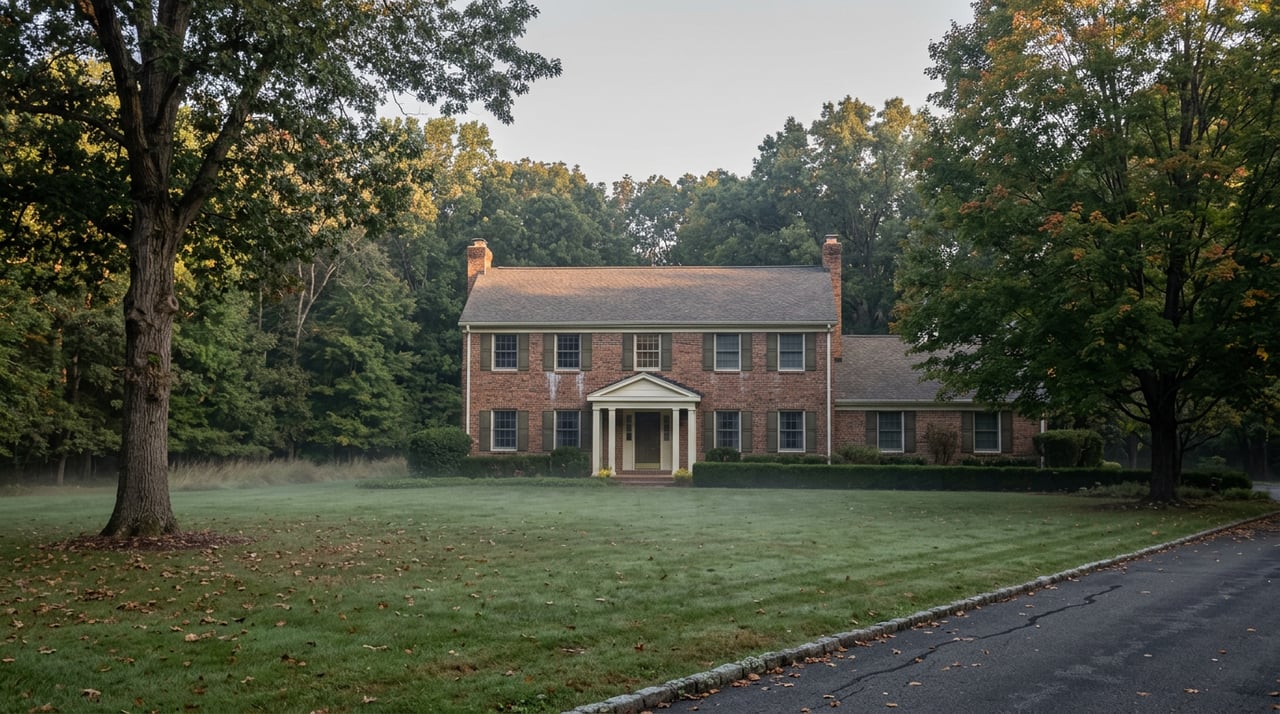
Sunfish Lake runs its city government with two employees, a City Administrator/Clerk and a City Treasurer. There is no municipal sewer line under any street in the city, no city water main, and no plan to install one. Every one of the roughly 520 residents living across the city's 1.7 square miles draws water from a private well and sends wastewater to a private septic system, on lots that run a minimum of 2.5 buildable acres. That is the deal residents accepted when the village incorporated in 1958 to keep its wooded, moraine-and-wetland character intact, and it is still the deal today.
It also means that when a Sunfish Lake home sells, the document that actually controls the closing date is not the buyer's loan approval or the home inspector's summary. It is a much narrower piece of paper: the septic Certificate of Compliance required by Dakota County before the transfer can complete.
A compliance clock, not just a disclosure form
Minnesota state law requires every seller to disclose in writing how a property manages its sewage before a purchase agreement is signed, but the state does not require an inspection at the point of sale. That decision is left to counties and cities. Dakota County made its choice years ago: a compliance inspection is required before a property served by a septic system can be sold. That single fact separates a Sunfish Lake closing from one in Anoka or Hennepin County, where sellers only have to disclose that a septic system exists, with no inspection mandated at transfer.
The certificate itself has an expiration date. A system older than five years needs a compliance inspection completed within the past three years to still count. A newer system gets a five year window. Either way, the clock is already running on every Sunfish Lake property, whether the owner is thinking about selling or not, which is exactly why the timing question matters more here than in most Twin Cities suburbs.
What happens when the certificate isn't ready
If a seller reaches closing without a valid certificate, Dakota County's ordinance does not let the deal simply proceed on good faith. It requires the seller to fund an escrow, held by a licensed real estate closer, an attorney, or a bank, equal to 110 percent of the contracted cost of installing a complying system. The buyer then becomes responsible for seeing that installation through on the schedule set out in the escrow agreement.
On a typical suburban lot, that number is inconvenient. On an estate-sized Sunfish Lake parcel, with a larger home, more bedrooms, and a proportionally larger drainfield, it is not a rounding error. A full system replacement designed for a large luxury home costs meaningfully more than one sized for an average single-family lot, and 110 percent of that figure sitting in escrow is a real constraint on how a deal gets structured, not a formality buried in the closing packet.
The upside is that this can be avoided entirely. Since 2021, Minnesota rules have allowed anyone who lists, or plans to list, a property to initiate a compliance inspection even before a purchase agreement is signed. Because a fresh certificate is good for three to five years depending on system age, a seller preparing to list this year can have the inspection done well ahead of a buyer ever walking through the house, turning a closing contingency into a settled fact before negotiations start.
The frozen ground problem
Timing carries one more wrinkle that is easy to miss if you are working from a generic Minnesota disclosure checklist rather than Dakota County's actual ordinance. Any closing scheduled between November 15 and April 15, when frozen soil prevents a reliable inspection, falls under a separate winter agreement. That agreement requires a permit application and a commitment to complete the compliance inspection by the following June 1.
For anyone weighing a fall listing in Sunfish Lake, that window opens in about seven weeks from today. A seller who wants the septic question fully resolved before closing, rather than carried forward into a winter agreement, has a real incentive to get the inspection scheduled now while the ground still allows for one.
Two different clocks on the same tank
Dakota County's compliance certificate is not the only requirement in play. Sunfish Lake's own city ordinance requires residential septic systems to be pumped every three years to remain in compliance with city rules, a separate cycle from the county's three-to-five-year certificate window. A system can hold a perfectly valid county certificate while being behind on the city's pumping schedule, or the reverse. A seller or buyer who checks only one of the two dates can walk into closing with an assumption that turns out to be only half true.
Three different desks, not one city hall counter
Part of what makes this straightforward for someone who has done it before, and confusing for someone who hasn't, is that Sunfish Lake splits these questions across three separate contacts rather than routing them through one office.
| Question | Who handles it |
|---|---|
| Zoning, land use, and lot questions | City Planner Lori Johnson |
| Septic permits and compliance inquiries | Septic contact Steve Kleist |
| Building, electrical, and plumbing permits | City of West St. Paul, under an administrative arrangement |
A buyer's agent unfamiliar with the city can lose real time calling the wrong desk. Knowing the split before a transaction starts, rather than discovering it mid-negotiation, is a small thing that saves real days on a tight closing calendar.
What this means at the table
For a seller, the practical move is to treat the septic certificate the way you would treat a survey or a title search: something you commission before you list, not something you scramble for once an offer is signed. A certificate obtained now is good for years, and it removes the single biggest source of closing-date uncertainty on a Sunfish Lake sale.
For a buyer, the certificate's issue date matters more than its existence. Ask when it was issued, ask whether the tank has been pumped within the city's three-year cycle regardless of what the county certificate says, and understand that Minnesota's general disclosure waiver under state law does not extend to septic systems or wells. Those two categories, along with radon and lead paint disclosures, survive even a signed waiver, so there is no version of a Sunfish Lake purchase agreement that lets a buyer contract around this.
For an investment-minded buyer eyeing a larger or older estate, an expired certificate is worth pricing into an offer rather than treating as paperwork. If the system needs replacement, the 110 percent escrow effectively funds it, but the buyer inherits the responsibility for completing the work on the county's schedule. Having a licensed septic designer scope the system before an offer goes in, rather than after, turns that unknown into a number.
A few direct questions
Does this apply to a home that has never changed hands, like new construction? Yes, but a system installed and certified within the past five years generally satisfies the requirement without a new inspection, since new installations already go through a county compliance sign-off before the certificate of occupancy is issued.
Does the well carry the same requirement? Not quite. State law requires a written disclosure of a well's location and status before a purchase agreement is signed, but Minnesota does not mandate well testing at transfer in most counties. In a Sunfish Lake sale, the septic certificate is the document that actually gates the closing.
Can a buyer and seller just agree to skip this on a cash deal? No. The general property disclosure waiver available under Minnesota law does not reach septic or well disclosures. They apply regardless of how the rest of the purchase agreement is written.
If you're preparing to list an estate in Sunfish Lake, or you're under contract on one and want a clear read on where the septic certificate and the city's pumping schedule actually stand, Sally English Group can walk through the timeline with you before it becomes a closing-day surprise.