At the southwest corner of Ford Parkway and Cretin Avenue, two limestone panels now sit in the middle of a new plaza. Just west of them, a four-story apartment building has an east wall made of fluted limestone that last stood on the main building of the Ford Motor Company's Twin Cities Assembly Plant. Ryan Companies and the Housing and Redevelopment Authority for the City of Saint Paul opened both on Sept. 29: the plaza, called Civic Square, and the building, called The Albert.
These pieces are original Ford stone. They are the result of a decision made almost twenty years ago, after the factory turned out to be impossible to save as a landmark.
The plant was too changed to protect
In November 2007, a historic-resource assessment hosted by the City of Saint Paul found the plant too altered to qualify for local designation or the National Register. It did not recommend preserving the building. It recommended that redevelopment include historic references, using salvaged materials where feasible. You can read the reasoning in the 2007 Ford historical survey report.
The Highland Villager explains much of the problem. Albert Kahn designed the main building with his brother Julius, a civil engineer whose company, Truscon, sold the steel-reinforced concrete system the plant used. That system made possible big open factory floors and large windows facing the Mississippi River Valley. Much of that river side changed when the plant expanded in 1968. The building historians tried to save was, by then, partly a different building.
The salvage idea lasted. The city's amended Ford site master plan, last amended Oct. 13, 2021, sets a policy goal of reflecting the plant's history, and the people who worked there, through design and amenities. According to the Highland Villager, large pieces of Kahn's work and the main building's red roof tiles were put into storage after the plant came down in 2013 and 2014. Civic Square is where the first of those pieces have come out of storage and gone back on public view.
What is standing in the square
According to the Highland Villager, three limestone friezes were recovered from the main building. Two have carved artwork. The third carries a line attributed to Sir Joshua Reynolds, the 18th-century English painter:
"Excellence is never granted to man but as the reward of labor."
Earlier plans showed all three friezes going into the square. Ryan's opening announcement says two are there now, as the plaza's centerpiece. The public reporting so far doesn't say which two were installed or what the carved panels show. If you walk over, you can answer that faster than any article has.
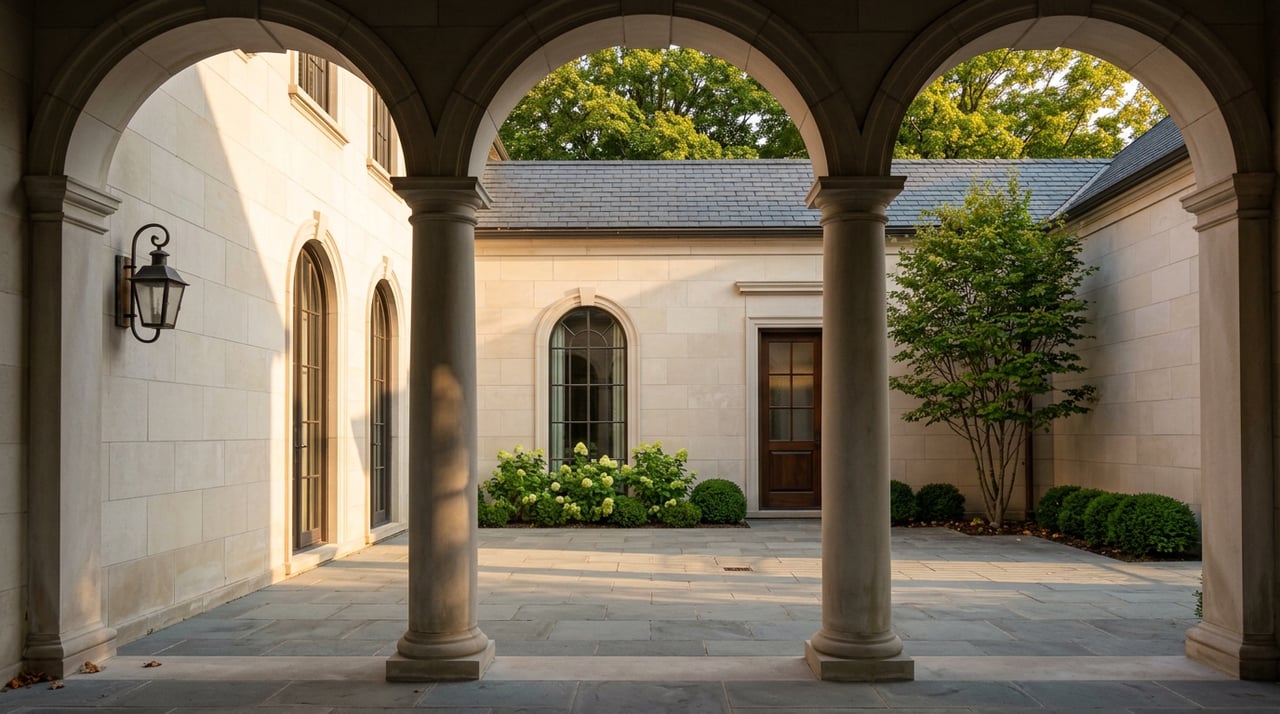
The wall facing the square is the bigger job. Ryan says the east side of The Albert includes the preserved 1920s facade, rebuilt from about 75 large stone pieces, some weighing as much as 13,000 pounds. The building is named after Kahn. The Villager notes that the fluted limestone was part of what historians called the "Kahn facade" when they fought to save the plant more than a decade ago. So the stones that preservation advocates couldn't keep in place now sit on the front of a new building, facing the plaza.
What those stones stood through
It helps to know what the friezes looked down on. The short version, drawn from the Twin Cities Ford plant timeline, the Star Tribune and the city:
- 1924. Ford's hydroelectric plant on the Mississippi began generating power for the assembly works. Ford chose the river site for power and for shipping.
- May 4, 1925. The first Model T came off the line. At 840,000 square feet, the plant was then Ford's largest outside Detroit.
- Through 1959. Workers mined silica sand from tunnels about 100 feet below the plant to make glass. One local history says the tunnels ran more than four miles. Ford ended glassmaking on the site in 1959.
- 1968. An expansion changed much of Kahn's river-facing design.
- 1978 and 1985. The plant switched to building only trucks in 1978. Ford Ranger production started after a major modernization in 1985.
- December 2011. Ford closed the plant. Ford and Arcadis then cleaned up the site for redevelopment.
- 2013 and 2014. The main building was torn down, and the facade pieces and roof tiles went into storage.
- Sept. 29, 2026. Civic Square and The Albert opened at Ford Parkway and Cretin.
The Villager also cites one history that called the Twin Cities Assembly Plant "the most beautiful industrial plant in the world." The friezes are what's left of that reputation, set at eye level.
The square was drawn with a restaurant next to it
The city's master plan calls it the neighborhood's physical heart, a place for seasonal activities, linked by a diagonal walkway to the larger plaza to the southwest. When Ryan presented early plans, a Ryan civil engineer told the Villager that one goal was a restaurant beside the square so diners could use the space. The Pioneer Press later reported that the finished square would include landscaping and room for outdoor dining.
That part hasn't arrived yet. The block that opened on Sept. 29 covers 2.97 acres. It includes 8,500 square feet of shop space on The Albert's ground floor, three separate retail buildings totaling 13,500 square feet, and a 13,000-square-foot Tierra Encantada daycare. In June, the Pioneer Press reported that Tierra Encantada, a Spanish-immersion child care provider, was the first tenant to sign on. Four other businesses had signed letters of intent and were negotiating leases, but none had been named. Ryan's October announcement lists the square footage but no shop or restaurant operators.
The low buildings along Ford Parkway have their own history. Original plans called for commercial or mixed-use buildings of at least four stories along that frontage. Ryan asked to build one-story buildings instead, citing difficult site conditions and financing. The Pioneer Press reported that the Board of Zoning Appeals denied the variances, and that Ryan's appeal was effectively approved by default at the City Council after a tie vote. As a result, the friezes face Ford Parkway across a row of one-story buildings that are mostly still waiting for tenants.
Where the diagonal path leads
The walkway out of Civic Square runs southwest toward the civic plaza and the central water feature. Beyond that, Ryan's announcement lists Gateway, Uŋčí Makhá and Assembly Union parks, more than 55 acres of open space, and 10 miles of walking and bike trails across the former plant site. Built so far are The Collection, with 230 apartments and a Lunds & Byerlys, a medical office building anchored by M Health Fairview, and Presbyterian Homes' Marvella senior community.
Until now, someone coming from Highland Village had little at the Cretin corner showing that a 1925 auto plant once filled the land behind it. In the opening announcement, Ryan's Sean Ryan called the square a gateway that honors the site's past, and Mayor Kaohly Her called the opening a product of "public-private collaboration." Two Ford friezes and about 75 Kahn stones now stand at the corner where Highland Park meets Highland Bridge.
Sally English works from Coldwell Banker Realty's Crocus Hill office and follows changes like this one, block by block, across Saint Paul. If you live near Ford Parkway and want to talk about how the finished Highland Bridge blocks, and the ones still being leased, fit into your own plans, Sally English is glad to talk it through. Let's Connect.