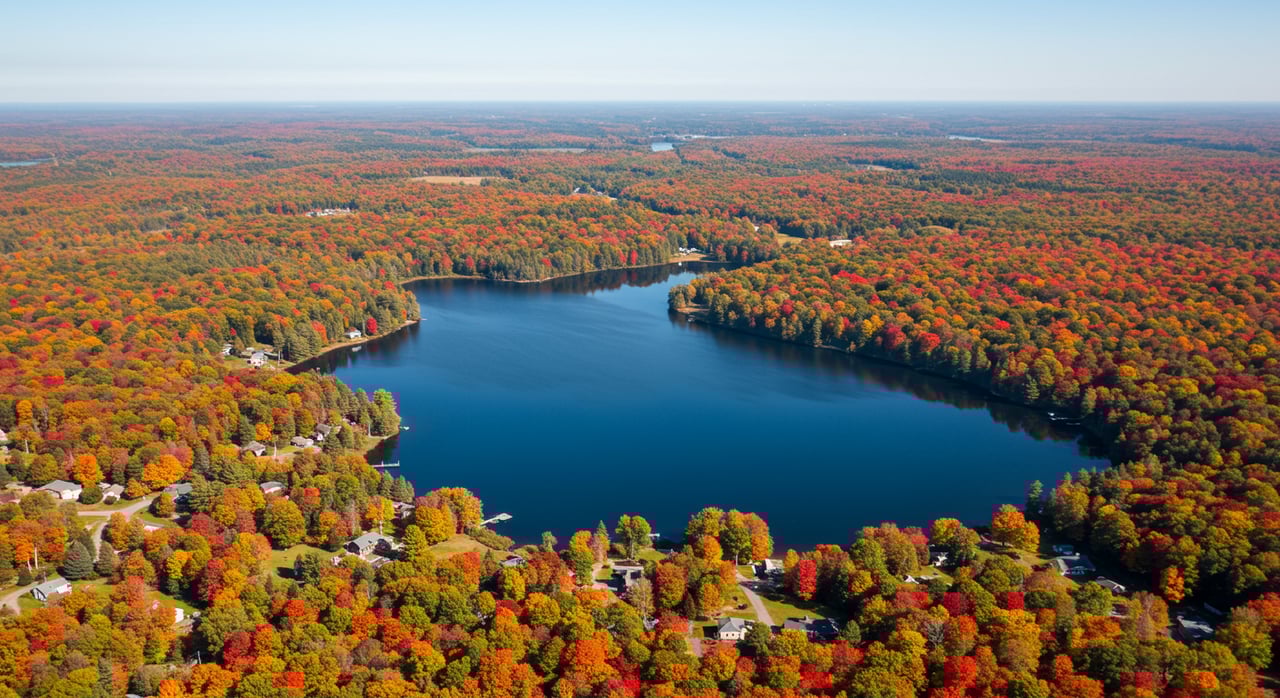
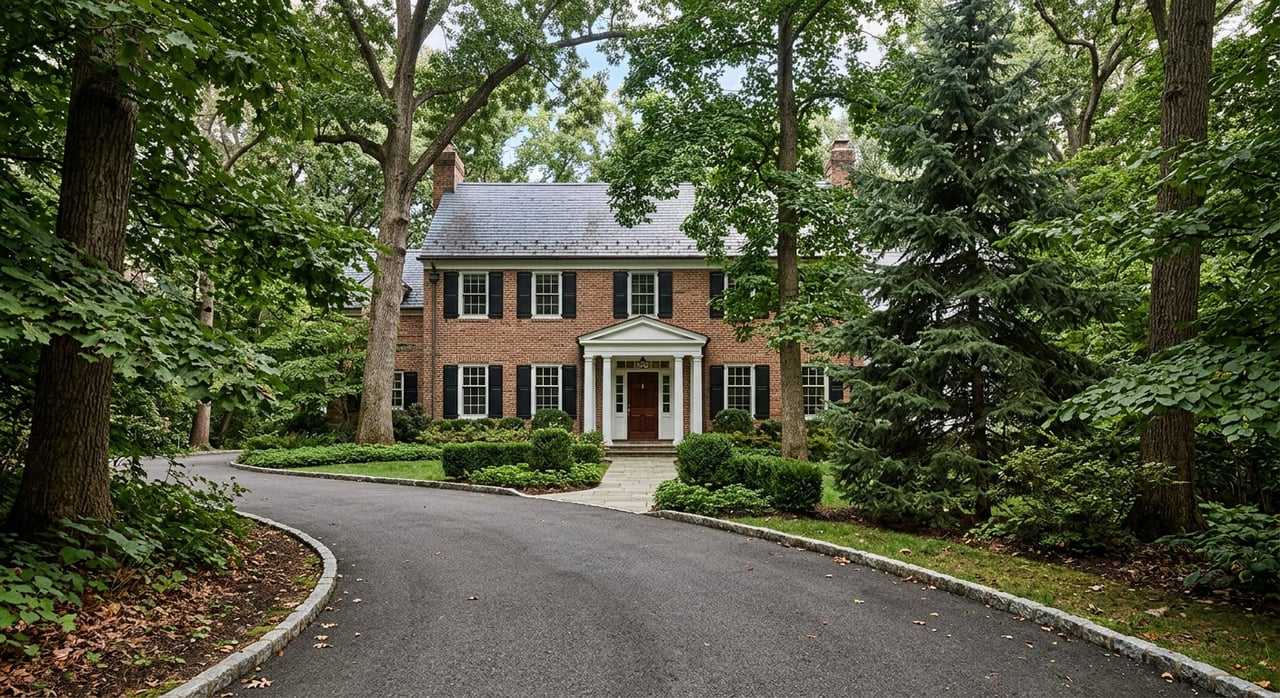
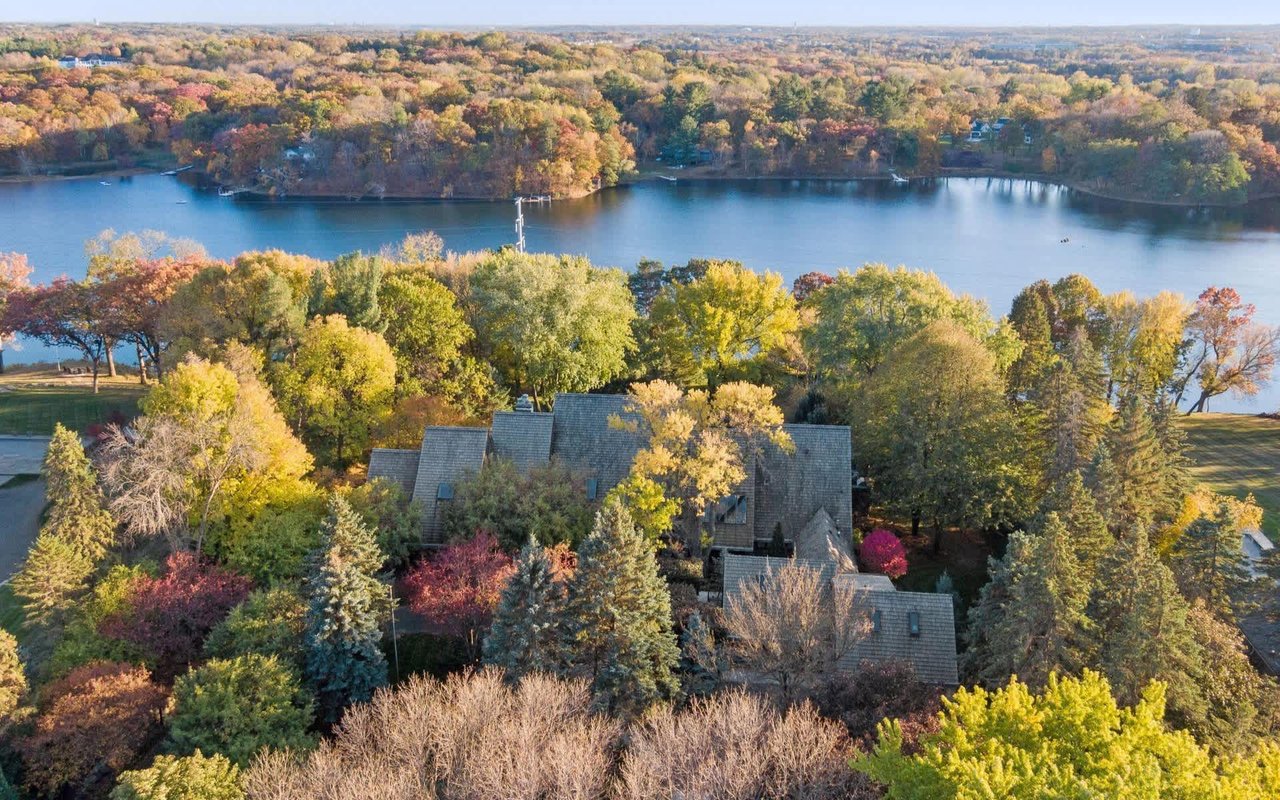
Drive to the end of Angell Road and you will find a cul-de-sac, a private driveway, and two overgrown lots that look, to any passerby, exactly like the woods around them. Nothing marks them as different from Musser Park a half mile away, or from the wooded buffer behind a dozen other properties in town. For most of the last 53 years, that similarity has been the point. Sunfish Lake was built around the idea that its forest cover would simply stay forest cover, whether the city owned it, a resident owned it, or a long-dead donor's family owned it.
That assumption turned out to be only half true. Somewhere in 2025, someone approached the city about buying one of the two Angell Road lots that make up Harmon Park. The inquiry sent city staff back into 1972 council minutes, and what they found is the reason this small town of roughly 520 people has spent the better part of a year debating a piece of land most residents rarely think about.
Two donations, two very different kinds of forever
In October 1972, Reuel Harmon, along with neighbors listed in the minutes as Mr. Tyler and Mr. Foote, offered two lots on Angell Road to what was then the Village of Sunfish Lake, free of charge. The council accepted, and in December of that year the clerk was directed to send the Harmons a formal thank you letter. The deed that followed restricted the land to "park and recreational purposes only."
Betty Musser's gift came later and worked differently. Her 22 acres were placed under a conservation easement, granted to the Minnesota Land Trust in December 2002, that keeps the land in its natural state in perpetuity. That word, perpetuity, is doing real legal work. An easement held by a land trust does not expire on a schedule. It runs forever unless the land trust itself agrees to release it, which conservation organizations are structured specifically not to do.
A deed restriction is not the same instrument. Under Minnesota Statute 500.20, most deed restrictions of this kind expire automatically after 30 years. Nobody in Sunfish Lake city government seems to have flagged this at the time. Thirty years after the Harmons' gift lands on 2002, the same year Musser Park's protection became permanent. One gift became unbreakable. The other quietly became optional, and stayed that way for 23 years before anyone checked.
| Harmon Park | Musser Park | |
|---|---|---|
| Size | Two lots, 2.69 and 3.26 acres | 22 acres |
| Donor | Reuel and Margaret Harmon, with Tyler and Foote (1972) | Betty Musser |
| Protection mechanism | Deed restriction, "park and recreational purposes only" | Conservation easement, Minnesota Land Trust |
| Legal status today | Restriction lapsed in 2002 under Minn. Stat. 500.20 | Permanent, held in perpetuity |
| 2025 assessed land value | $357,300 per lot, per Dakota County | Not appraised for sale |
| 2026 status | Under council review | Trails cleared by the city this spring |
What the city found when it looked
Once the lapse came to light, the city's engineer confirmed both Harmon Park lots are buildable. Dakota County's 2025 assessment puts each at $357,300 in land value, which the city's own newsletter noted could understate what an actual sale might bring. Put the two lots together and you get roughly $714,600 in land the city didn't know it could sell.
For context, Sunfish Lake's preliminary 2026 taxable levy is $671,308. Selling the Harmon Park lots would raise more than the entire city collects from every property owner in town in a year, a notable figure for a city whose entire staff consists of a City Administrator/Clerk and a City Treasurer. That comparison is why this stopped being a quiet parks question and became a budget question, the kind of question a town this size does not get to ask very often.
Where residents actually landed
The city's mayor's office reported that after residents were given the full financial and legal picture, roughly 25 contacted the city in favor of preserving the lots, against about 3 in favor of selling. At the December 2025 council meeting, Scott Buell, whose great-grandfather was among the original landowners who donated the property in 1972, argued the land should stay in city hands to honor what he described as the family's conservation intent. Jim Stoll raised the more practical problem: whatever happens, the park is currently in disrepair, and he and other residents floated forming a volunteer group to clear brush and reopen the paths themselves. Fran Lamey spoke against any development of the site, framing continued public ownership as something residents themselves get to use, not just look at from the road.
The council's own newsletter has been careful to correct a misconception that had spread in these conversations, that Harmon Park was somehow designated as protected green space the way Musser Park is, or set aside as a wildlife preserve. Neither is accurate. The deed says park and recreational purposes only, and for over five decades that restriction did the job on its own, right up until the calendar caught up with it.
The council tabled formal action, choosing to wait for a full digitization of the city's historical records before deciding anything, and set June 9, 2026 as the date to reopen the conversation with residents. Minutes from that meeting were not publicly available as of this writing, so where the debate landed this summer remains an open question heading into fall.
The other park got its trails back first
While Harmon Park's fate sat unresolved, Musser Park's did not need a vote. Because the Minnesota Land Trust holds a permanent easement there, the city knows with certainty that the 22 acres will still be forest a decade from now, which makes ordinary maintenance an easy call rather than a philosophical one. After residents flagged storm damage and unwalkable trails at the December 2025 meeting, the council approved a $3,600 contract with Morgan's Tree Service to clear fallen branches and hazardous limbs. By spring 2026, the city's newsletter confirmed the trails were cleared and open again.
It is a small, telling contrast. One park's certainty made a $3,600 maintenance decision easy to approve on the spot. The other park's uncertainty is what has kept a much larger decision unresolved for the better part of a year. Certainty about ownership, it turns out, is what lets a city spend money on upkeep at all.
A decision that may outlast its own mayor
There is one more piece of timing worth knowing if you live here. Dan O'Leary, mayor for the past seven years after previously serving on the Planning Commission and City Council, announced earlier this year that he will not seek re-election in November 2026. Sunfish Lake holds its municipal elections in November of even-numbered years, alongside the general election, which means the person who called the June 2026 meeting on Harmon Park may not be the one who eventually closes it out. Whoever residents choose this fall could be the one who finally decides whether those two wooded lots on Angell Road stay in the deed-restricted middle ground they have occupied since 2002, or move toward one of the more defined outcomes the city has laid out: continued city ownership as-is, active development into usable park space, or sale for some other public purpose.
Why this matters beyond one cul-de-sac
Sunfish Lake's entire identity rests on the idea that its woods are permanent. The city's own comprehensive plan, approved by the Metropolitan Council, describes the town as an island of green space in a region that keeps developing around it. Most of that island really is locked in. Musser Park cannot be built on. The Russ Wahl Wetland cannot be built on. What this year's Harmon Park conversation reveals is that permanence in Sunfish Lake has never been one uniform legal status. It is a patchwork, and at least one piece of that patchwork sat unguarded for over two decades without anyone noticing until a stranger asked to buy it.
If you live near Angell Road, or anywhere in Sunfish Lake, that is worth carrying with you the next time you walk past a wooded lot and assume it will stay that way because it always has. Sometimes it will. Sometimes the paperwork quietly ran out years ago, and nobody has had a reason to check.
If you are watching this decision unfold and want to talk through what it might mean for property near Harmon Park, or for Sunfish Lake more broadly, I am always happy to be a resource. Reach out to Sally English any time.